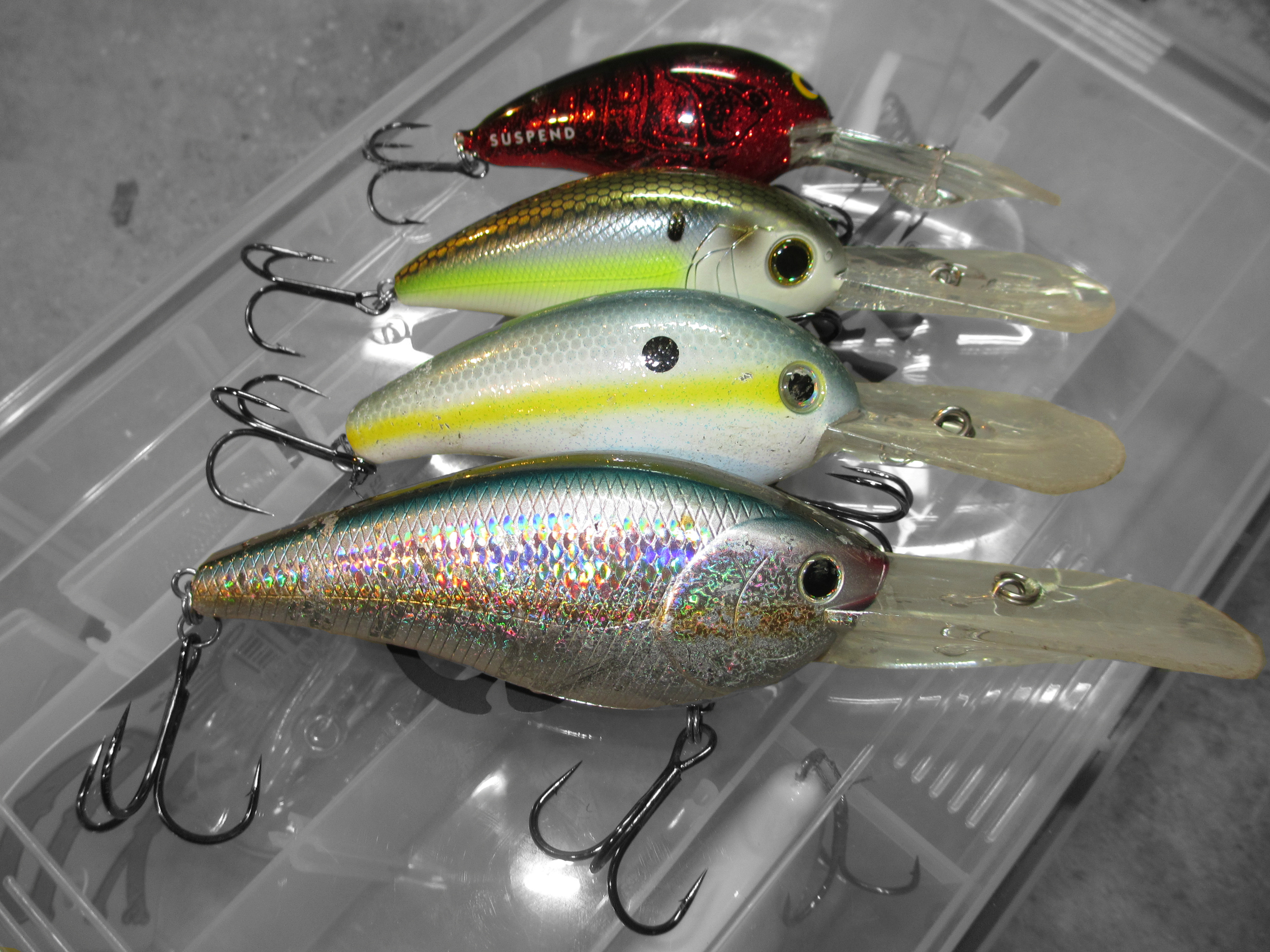
Lipless Crankbaits in Winter?
Most anglers consider a lipless crank to be a warm water lure. Its something you pull out after the spawn and fish until the bait goes deep in the fall. There is little doubt that it shines during these periods but if that is the only time you're throwing a rattle bait you're missing some of the most exciting fishing of the year!
Lipless crankbaits are a 12-month a year bait. Whether you're fishing in 2 feet or 70 feet, 75 degree water or 38 degree water, there is a bass just waiting to smash the bait. The key is how you approach the technique.
In this video we break down 4 key retrieves that will help you take full advantage of the baits you already know and love. In addition we will break down the key factors to look for (weight and sound) and how they combine to create the perfect package.
We're not here to try and convince you to buy a particular bait. You can buy any bait, or better yet, open your tackle box and pull out a bait you already own, and put these retrieves to work on your local lake. I will however, tell you my favorite lipless baits for cold water bass fishing. But more importantly, I'll tell you how I came to that conclusion.
Let's start with the retrieves:
1) The Flip Flop: The flip flop retrieve (unfortunately it has nothing to do with my favorite footwear) involves very gently lifting and dropping the rod tip without moving the bait laterally across the bottom. You quite literally flip the bait back and forth from one side to the other without lifting it off bottom. Every 10-15 flips you give the rod an extra bump to move the bait forward about 12 inches then repeat the process.
When and Why? This retrieve works best in the coldest of cold. The bass are lethargic, they don't want to pursue a fast meal. Instead of trying to draw a reaction you're simply making commotion, letting out extra sound, and giving the bass time to inspect the bait. They're slowly lulled in and when the bait hops away, they attack.
2) The Shake: This retrieve is almost a perfect mirror of how I like to work a jig in cold water. It involves shaking the bait right on the bottom. I shake it very aggressively but without moving the bait forward. After 5 to 10 seconds of shaking I snap the rod tip and hop the bait forward 12-18 inches. Once it settles back to bottom I begin shaking again.
When and Why? This retrieve works best in cool to cold water. If the fish are open to feeding some but are still not aggressive, this will fool them. The incredibly obnoxious sound given off by an aggressively shaken lipless is enough to drive anyone insane. (If you fish from an aluminum it will drive you more insane than it does the fish!) Once the fish is agitated and ready for a fight the bait snapping up off the bottom is enough to make them come unglued!
3) The Gentle Approach: This retrieve is incredibly simple! Whether you're in a grassy pond, a rocky ledge, or a featureless mud flat you can catch bass with this approach. After letting your bait settle to the bottom reel up the slack, draw the line tight, and lift the rod 12-18 inches. Lift just fast enough to feel the bait begin to vibrate. Hold the rod still and allow the bait to pendulum back to bottom. Once its settled let it sit idle for 2-5 seconds then repeat.
When and Why? This retrieve is deadly from September to April in a variety of environments. It shines when the water is cool but not cold. If the fish are doing anything from ambushing bait shallow, to sitting under docks, or even lounging in a deep water haunt, this retrieve will get them to bite. Don't be afraid to use this as a direct replacement for a shaky head, spoon, or even a jig.
4) The Rip and Rattle: The first time I saw this approach I didn't know what to think. Was I watching bass fishing genius in the making or just another snagger doing his worst? The weigh-in later that afternoon told the story! This retrieve involves letting the bait settle just long enough to hit bottom. As soon as it hits you sweep the rod (set the hook). As you're reeling up your slack the bait settles to bottom again and you sweep again. This retrieve requires a heavy bait to get back to bottom between sweeps. (You can see how this could be confused with snagging but I assure you the bass come to the boat with the bait in their mouth)
When and Why? The Rip and Rattle is DEADLY when the bass are shallow and feeding. Water temp doesn't seem to matter as its a pure reaction bite focused on triggering an extremely aggressive bite. If the bass are in the shallows and bait is present, you may want to tie the rod to your arm so you don't lose it! The combination of the bait flying through the water, extremely loud sound, and repetition, is more than most bass can stand. If they're under docks, tie it on twice!
Implementing these 4 retrieves will turn you into a cold water rattle bait fishermen overnight. It sounds crazy until you try it for yourself. The fish will take it from there!
I don't like to recommend specific baits because its important to find what works for you but this is one of those rare exceptions where some baits just work better. Bear in mind, I haven't tried every bait on the market but if you want a place to start you can't go wrong with these three and yes, they're in order of importance.
1) Lucky Craft LV-500: Its a killer. This is the best I've found. Its loud, compact, heavy, and has size 4 hooks (this makes light line and a finesse approach an option when the fish are finicky). Its not perfect, but if there is a better all-around bait I've yet to find it.
2) Lucky Craft LVR D-15: When the baitfish are large the D-15 can out-produce the LV-500. Its got larger size 2 hooks, the same deep sound, weighs 1 ounce, and has some killer paint jobs.
3) The Strike King Red Eye Shad: In 1/2 and 3/4 ounce options you get a medium size bait, large hooks, a deadly sound, all at a fair price.
Understanding sound, weight, and color is also important to your success.
Sound: In cold water, a deep sound is best. Don't be afraid to walk down the aisle at your local shop shaking every bait you can find. The deeper the sound, the better it will work.
Weight: 3/4 ounce seems to be the magic number. If you're working the slower retrieves you can branch out and get away with lighter weights but for the "Gentle Approach" and the "Rip and Rattle" 3/4 or more is critical to how the bait moves.
Color: Let's keep it simple... I like a clear shad color, a clear/opaque mixed color, and a flashy color. In the lucky craft that's going to be "Ghost minnow" , "Light Hitch", and "American Shad". If you're throwing the Strike King think about using "Clear Water minnow", "Sexy ghost Minnow", and "Gold Sexy Shad". I like the clear baits on bright sunny days or in very clear water, the flashy colors in overcast or low-light conditions, and the mixed colors everywhere in between.
If you've made it this far I already know you're open-minded. Take it one step further and really give this a try. Convincing anglers to throw lipless baits while its cold is like trying to convince a kid they're going to like their dinner. You're just going to have to trust me on this one.
I look forward to your feedback as you experiment with these baits and retrieves. Good luck!