
Frog Modifications to Land More Bass

The water is warm, the grass is growing, and the bass are shallow, the time has come. If you aren't throwing a frog by now you're missing opportunities for some heart-pounding explosions that you'll never forget! The frog is a key presentation during the summer months that every angler should at least have a familiarity with. Whether you're popping a frog in the shade of docks, walking it along a rocky shoreline, or dragging it on a cheese mat, its a fun way to lure BIG bass out of the depths.

The frog has a reputation for giant bass. Unfortunately it also has a reputation for missed fish and broken hearts. This video is going to cover some of the simple changes you can make to your frogs that will eliminate the heartache and put those big fish in the boat.

This shows the length comparison between the stock leg and a leg that has been cut down to eliminate short strikes and missed bites

The key to consistent success comes down to two simple changes. In my opinion, every frog should have the legs trimmed and the hook position altered before the bait is ever thrown in the water. There are dozens of other changes that you hear about from time to time but these two are easy and have a huge impact on your success.

When trimming the legs I cut the rubber with scissors until there is approximately 1.5 to 2 inches of material left. This increases the odds that the bass will target the main body of the bait rather than clamping down on just the legs. An added benefit of the trimmed legs is that its also easier to walk a frog once the legs have been cut shorter.
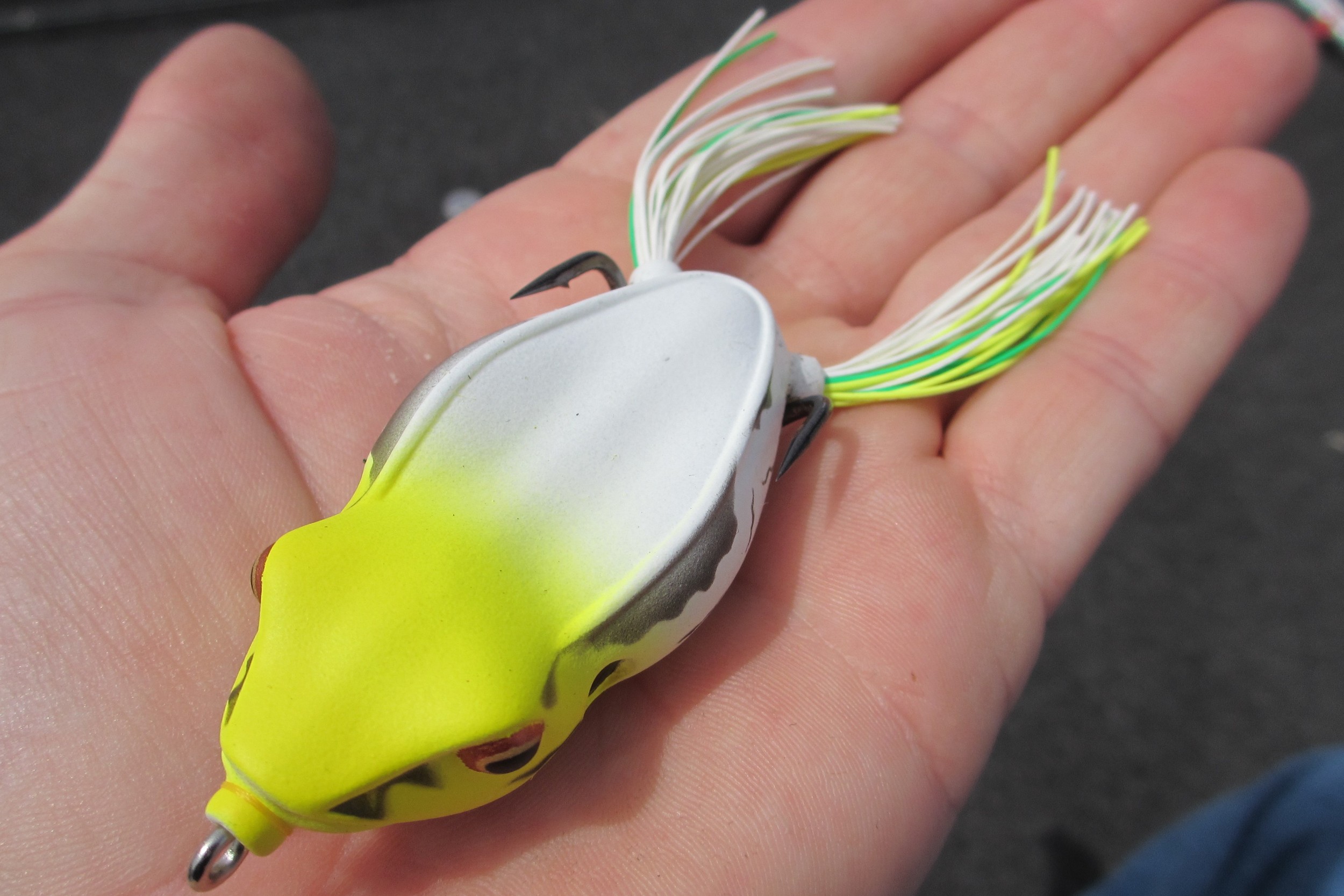
Here you can see a properly modified frog. Both the short legs and increased hook gap are visible

Here you can see a properly modified frog. Both the short legs and increased hook gap are visible

When modifying the hooks I bend them both out and up, away from the body. By doing this I am able to create a larger hook gap. When bass eat the bait with a modified hook they no longer need to fully crush the body of the frog to expose the hook. Doing this makes it much easier to hook the bass, even when an angler has a softer hookset. 

Depending on brand, bending the hooks can take a great deal of force. I generally have to bend the hooks farther than I want, as the steel will spring back part way as soon as the pressure is removed.  Use a stout pair of pliers and exercise caution.  its very easy to slip and end up on the wrong end of a strong hook. If you take your time, you shouldn't have any issues.

We hope you'll take these tips and apply them to your fishing. Once you do, come back and share your experiences. We'd love to hear about the bass you're putting in the boat!

Big Bass on the Spittin' Wa frog

Earlier this spring Tim and I were approached by River2Sea about a new frog they were planning to release at ICAST. At that time the Spittin' Wa didn't even have a name. After seeing the bait, having the opportunity to film with the frog before it hit the market sounded like a great opportunity and the chance to have some fun with a brand new product.I was looking forward to fishing with this unique frog, what I didn't expect was to start catching consistently bigger bass than I had caught on a frog in years past. After spending a few months with the bait I feel that there are a few factors contributing to the increase in fish size.

1) SIZE The Spittin' Wa 70 is a large frog. In fact, the only baits I know that are bigger are the Spro King Daddy, and the Snag Proof Frogzilla The large profile naturally lends itself to big bites.

2) WATER DISPLACEMENT The cupped face moves a lot more water than a traditional frog. As a result I was able to fish the frog out over deeper water and pull up large fish earlier in the spring than I had in the past. The wake that tracks behind this frog in open water is pretty substantial and helps to call fish in frog greater distances.

3) OVERSIZED HOOKS As odd as it sounds, strong hooks make all the difference in frog fishing. For many years a "secret" frog modification has been to reinforce the base of the hook where the shanks come together. The reason for this is that a hook can flex and deflect away from the surface it is supposed to penetrate during a hook set. While this doesn't happen often, it is most likely to happen on the largest fish with the largest hard bone section in their jaw. The hook in the Spittin' Wa 70 is larger and made of a heavier gauge wire than other frogs I have fished in the past. The result is a very stable hook that doesn't deflect when setting in to big fish.

I hope you enjoy the video. This frog is deadly and definitely worth adding to your arsenal. If you don't have the Spittin' Wa in a local shop you can pick them up and support Tactical Bassin at the same time by following this link to tackle warehouse.

I should also add that like most baits, I don't fish these straight out of the package. I shorten the legs and change the hook angle slightly before fishing the baits. I'll be sure to cover those modifications in a future video to clarify any questions. In the meantime, pick a few up and see if the size of fish your catching on a frog increases.

Punchin' and Froggin' on the CA Delta

Can someone explain to me how a $3 frog could work so well? Isn't it common knowledge that you have to spend $20+ on a frog from Japan with a fancy paint job to get fish to bite? I guess not! This particular morning I had headed out to the delta with one thing on my mind; Punching. The plan was to strip the boat of everything but two punch rods, a handful of baits, weights, and hooks, and the Go Pro Camera. I figured I'd spend the day having fun and film a video explaining how stripping the boat of gear helps you commit to a pattern and ultimately helps you put more fish in the boat.

So what went wrong? One word: TIDE.

If it were a guide trip, or even a trip with friends I'd study the tides and make the best decisions possible. When its just me and a camera I didn't even bother to look at the tide charts. Do you know what a "minus tide" does to a shallow punch bite? The big ones go away and the baby bass come out to play! As you'll see in the video my plan quickly unraveled and I was forced to do what any self respecting fisherman would do... I drove to the nearest tackle shop and spent money!

Who would have thought that I would discover a long forgotten bait (at least to me) and begin to hammer the fish? That's exactly what happened! In the following days I kept catching fish and the size got bigger. There will be more videos to follow on this subject.

For those curious about what they're seeing in this video, the punch fish were caught with a 2 oz. punch weight, a Dirty Jigs Punch Skirt, a 4/0 hook, and a Dobyns 766 Savvy Rod (A phenomenal punching rod for the price). The Snag Proof Weed Demon fish were caught with a Dobyns Champion 736, my favorite frog rod.