
Paul Elias Discusses the 2011 Bassmaster Classic

Very few anglers have dedicated as much time to the sport of bass fishing as Paul Elias. Paul has left a mark on nearly every bass angler who has picked up a rod since the 1980′s. The next time you pick up a deep diving crankbait take a moment and consider where it came from. That entire genre of lure was born from Paul’s Classic win in 1982. In recent years Paul set the all-time heavyweight record in a BASS event proving that after 30 years in competition, he is still a force to be reckoned with.
Is there anything else Paul could do to gain our respect? How about I let you in on a little secret; he’s a trophy bass angler too. Paul is one of the most well-rounded and universally-respected anglers I’ve had the pleasure of meeting.
During a recent discussion with Paul he agreed to share some insights on the upcoming Bassmaster Classic on the Louisiana delta. Its a unique look into the mindset of a champion. Have you ever wondered what it would take to compete at the national level? This clip will shed some light on the preparation that is required to remain competitive.


Now that you’ve seen the video I’d like to lend a few more insights into what Paul is saying. If you watch it once you will hear some great information but I encourage you to go back and view it again. Its staggering just how much information is packed into this clip.
When the average angler prepares for a tournament they come up with the best game plan they can, hopefully with some sort of back up plan, and then wait for the day of the event to see how they rank. Paul is talking about scenarios that you and I would likely never consider. I hear him saying “Yes, I’ve got a plan… but what if my boat breaks down, what if its foggy, what if the fish move, what if, what if, what if.”
For the average guy any one of those scenarios would derail the plan if not completely wipe the angler out mentally. Paul is thinking so far ahead that months before the tournament even arrives he knows what to do if the weather shifts. I’m confident that if something goes wrong on the final day of competition and everything is on the line Paul won’t panic. The reason for this is simple: Preparation. He has already prepared himself for each of those scenarios so that nothing can derail his mind from his ultimate goal. His own words sum it up best, “I’m going to think WIN the whole time. You’ve got to do that if you’re ever going to be a winner.”
What more can be said? Watch the video as many times as you need to until you realize that these elite anglers are not just getting lucky. Things go wrong for them just like they do for us but through constant preparation and planning they are able to regroup and move forward more quickly than everyone else.
Paul, thank you for taking the time to share these insights with the Tactical Bassin community. I look forward to sharing more of your insights in the coming weeks and months. I wish you the best at the Classic and will be following the results closely.

Beating The Bank For Giants: Part 1

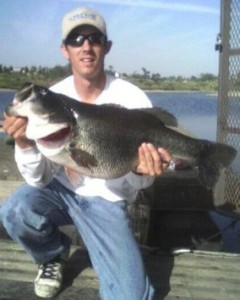
It is with great pleasure that I introduce Adam Hinkle to the Tacticalbassin community. Adam is a close friend and a top-notch angler. He excels in the pressured lakes and reservoirs of Southern California and is known for his ability to adapt to changing conditions. One day you may see him on the boat, the next day he’s climbing through the brush approaching pressured fish from shore. He thinks outside of the box and that’s good enough to gain him a soapbox on this site.
We recognize that not everyone can afford a shiny bass boat. For that matter, not everyone wants a shiny boat. With that in mind, it seems only fair to bring an angler on board who not only fishes from shore but excels at catching trophy bass with his feet planted firmly on the ground.
The truth is, that introduction does the guy no justice. He’s been featured in several magazines, has caught numerous trophy bass and even landed an 87 lb Blue Catfish on 4 lb line. Seriously, you need to listen to what this guy has to say. With that, I’ll let Adam take it away.
-Matt
_________________________________

You are the biggest, oldest and wisest bass in your lake. You are king of your water and have seen every trick in the book. As soon as you hear that familiar sound of an outboard motor cranking in the morning, your guard goes up. You are wise and know that all of these sounds – sonar ping, trolling motors humming, footsteps on the bottom of boats and the slapping of water on a hull – are signs of warning. That trophy hunter, floating above you on the surface a hundred yards away, doesn’t have a chance because you spotted him long before his trolling motor was dropped in the water and even before he thought about making his first cast.

Today, something is different. The trout swimming your way, bumping through all of those rocks looking absolutely delicious, just appeared out of nowhere. It doesn’t seem completely normal, because no real trout would swim right at you this arrogantly. This is just too easy of a meal, right? But there’s no sign of warning, no boat, no footsteps, no locker slam, no sonar ping, no noise whatsoever. Just a stupid, little trout about to swim right into your face. You are not going to pass up this opportunity.

This is exactly why most of my largest bass have been caught walking the bank. Those fish had no idea I was there. Big fish, as you know, are smart, very smart. They really have seen everything in the book. They know better than to ignore signs of warning, but when you take all of those warning signs away, they become vulnerable.
Fishing the swimbait from the bank is how I learned to trophy hunt. I didn’t get nearly as many bites walking the bank as I do from a boat because I was limited to how much water I could cover, but the bites I got were big, really big. I was able to focus on the most prime spots on the lake and spend more of my time fishing slowly in big fish water. There was no paying attention to GPS points, no watching my meter, no fighting the wind with the trolling motor. I had complete control of my bait, I knew I had set myself up in productive water and I knew exactly what was happening on the end of my line. But most of all, those fish didn’t have a clue I was there.

The next time you want to get out for a few hours and toss the big bait, follow these steps:
-Think about a few specific spots at your favorite lake you can reach from the bank that you know big fish frequent.
-Pick a lake that is pressured by boaters. This is what this whole idea is about – taking advantage of a giant pressured bass’ vulnerability.
-Grab a rod, a few baits, a camera, a scale and eat your Wheaties because you’re going to need them!

-Adam Hinkle

Advanced Swimbaits Part 1: Skipping the big baits

Throwing a swimbait is not nearly as difficult as most people make it out to be. Anyone can go to the lake and throw a big bait and have a good shot at catching a big fish. However, if you live in an area where it seems like everyone is already throwing the big baits, it may be time to step your game up even further.
Skipping a swimbait is just one example of something you can do to set yourself apart from the pack. If you’re on a body of water with docks, tullies, overhanging trees, or other forms of dense cover learning to skip the big baits will let you reach fish that no one else is fishing for.

The technique is fairly simple and can be mastered in a few short hours (or less) by a well-rounded angler. By keeping your rod low to the water and slinging the swimbait with more force than is used for a standard cast you can get the bait to skip effortlessly across the surface of the water and back into heavy cover.
Give it a try then come back and share your experiences. I hope this lets you reach fish that you’ve never reached before and maybe, just maybe, catch the fish of a lifetime!

Swimbaits Part 4: Fish Care

The way the breeze felt coming across the water, the angle of the sun in the morning light, and the way that giant bass looked when she jumped next to the boat will be remembered long after your first trophy fish has been released. There is something special about catching a big bass that instantly memorialises the moment in one’s memory.
Years later you’ll look back and remember the experience like it was playing out for the very first time. When replaying those moments that last thing you want to consider is whether or not that fish survived the experience. By treating your catch with respect and care you can virtually insure that she was returned to the water safely.
There is nothing greater than watching the fish of a lifetime swim casually back to deep water and few experiences darker than watching the same fish lose it’s life before it could be set free. If you fish for trophy bass long enough the day will come when one of your catches doesn’t survive the ordeal. Speaking from my own experience, it is a sad day.
Follow these quick tips to ensure that your next bass is able to swim away in the same condition that you first found her in.

Let’s hear your thoughts. Is there something I missed? Now is your chance to chime in and share your own experiences.